
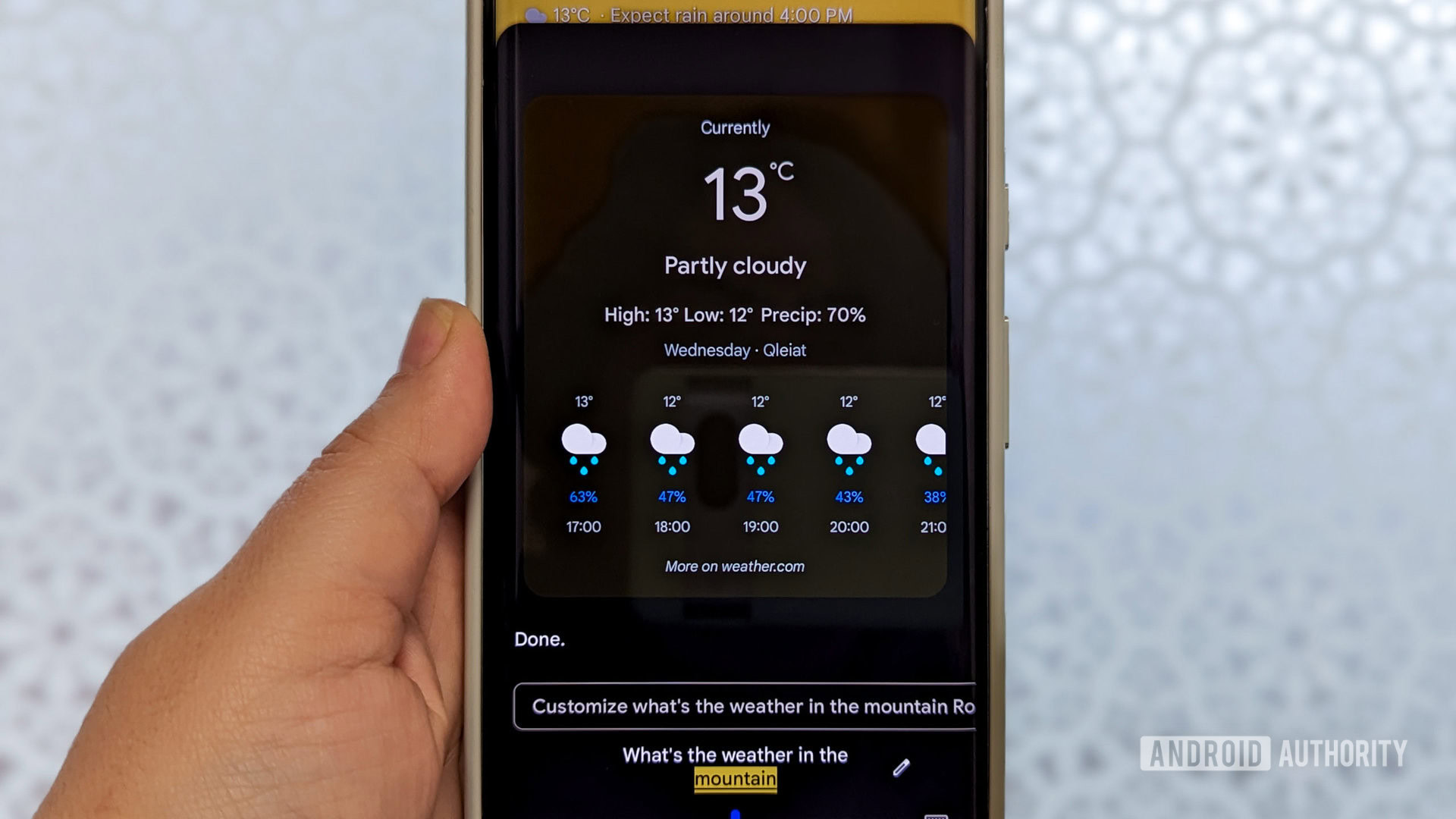
If you live outside the US, you’ve probably hit this problem with Google Assistant and smart speakers more than once: Getting voice recognition to understand a very local person or town name is an exercise in frustration. You try to pronounce it the native way, then you try to guess how an English-taught AI machine would pronounce it, then you eventually curse and decide to type the question on your phone or computer instead of wasting more time with voice commands.
I know this has happened to me weekly, if not daily. My biggest problem, when I used to live in Lebanon, was inquiring about the weather in two towns I visited pretty often. The first is called Ballouneh and pronounced like Balloon’eh, while the second is Qlayaat and… Well… Let’s just say that it can be spelled in dozens of ways ranging from Qleiat to Koleyat, and you don’t want to know how it’s pronounced. Assistant was never good at recognizing either of these, no matter how I enunciated them.
Snowflake customers can now take advantage of Gemini 4 Argon natively in Snowflake’s AI tools—bringing deep reasoning and visual analysis […]
For life sciences organizations, real-world data (RWD) has become one of the enterprise’s most valuable assets. Operationalized as real-world evidence […]
Enterprise HR and financial data is essential to understand how a business runs. But it doesn’t tell the full story […]
Our services help both the big and small organisations in the identification of security breaches and provide outclass solutions to prevent any potential harm.